MaterialOS vs MaterialBill for shops leaving paper

Both help Indian shops leave notebooks for GST bills. MaterialBill fits freemium billing across trades, with a free plan capped at 30 GST bills a month and paid tiers that add staff logins. MaterialOS is a paid ledger for building-materials dealers who need stock, sales, and udhaar on phone when staff bill: margin hide, credit hard stops, BM beachhead. If free-forever billing is the job, stay on MaterialBill. If staffed mornings and purchase-cost hide matter, try MaterialOS on the 30-day Pro trial.

Last updated 2026-10-23

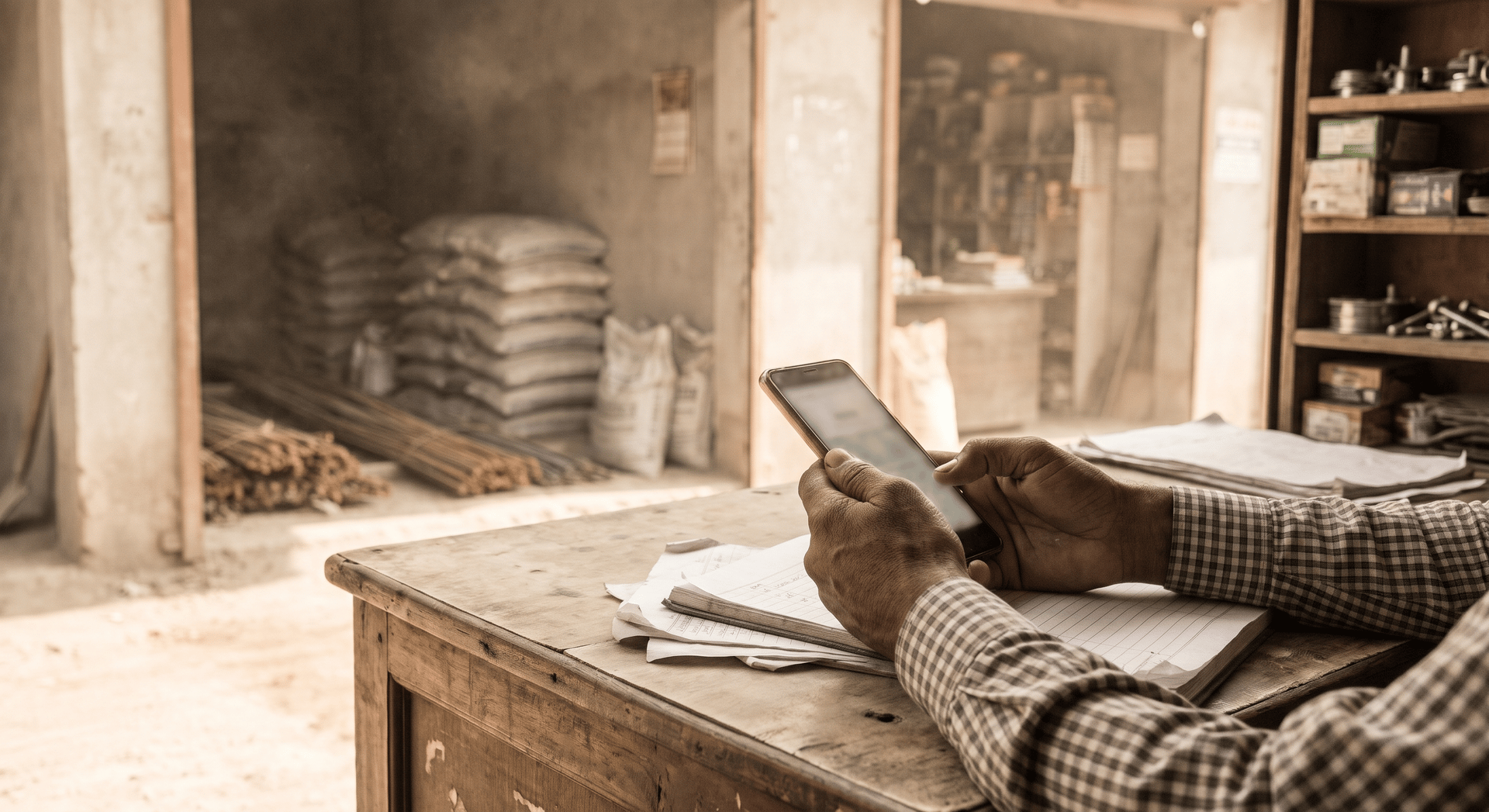
Staff at a building-materials counter holding a phone over an open paper ledger, screen soft and unreadably out of focus

How they differ

Shared job: leave paper and raise GST invoices. Split: MaterialBill markets free GST billing for construction, kirana, medical, hardware, and more, with WhatsApp sharing and udhaar khata. Paid cards add staff logins (Trail 10, Basic 1, Standard 5, Premium 20). Public homepage and /pricing did not clearly claim multi-branch or multi-godown as of 2026-10-23. MaterialOS signup beachhead is building materials only. It optimises for staffed counters: five roles that hide purchase cost, credit limits enforced at billing, multi-shop on one ledger when a second counter opens. Not freemium forever. 30-day Pro trial, then Starter, Growth, or Pro. Not a full Tally replacement. Does not file GST returns.

If sales staff see purchase cost on cement and steel, you negotiate against yourself on every bill. Hide the cost. Keep the counter fast.

Akash Paul · CEO & founder

Side-by-side

MaterialBill list prices from materialbill.in homepage monthly cards and materialbill.in/pricing yearly (capture 2026-10-23). SaaS plan ₹ show no excl./incl. GST label; do not claim either. Product issues GST-compliant bills to customers.

Trail Package yearly shows ₹9,99,999/year (works out to ₹83,333/month on page). Treat as site anomaly or placeholder; re-check before quoting as a real offer. Monthly Trail ₹21/mo appears on homepage cards.

MaterialOS list prices from Docs/pricing-policy.md: Starter ₹799/mo, Growth ₹1,799/mo, Pro ₹3,499/mo, all excl. GST (+18% GST at checkout). Annual = 2 months free. 30-day Pro trial, no permanent free plan.

MaterialBill freemium: free plan for life with 30 GST bills/month (FAQ); 7-day refund on paid plans; after trial pay or drop back to free with data kept.

Leaving paper is the shared job

Notebook khata, WhatsApp tallies, and memory at the counter still run a lot of Indian shops. Both MaterialBill and MaterialOS exist to get those bills into software with GST fields that a CA can recognise. That overlap is real. The fork shows up after the first week, when someone other than the owner raises a bill, when cement bags leave the yard on credit, or when a second counter needs the same stock and party balance. MaterialBill presents itself as free GST billing software for Indian shops: construction, kirana, medical, hardware, and more. Homepage and pricing copy push invoices, stock, udhaar khata, and WhatsApp sharing. Construction is named; so are several other trades. That wide net is honest marketing for a freemium billing product. MaterialOS takes a narrower beachhead on purpose. Public signup today is building materials. We are not pretending to be the default app for every kirana or clinic. If your yard sells cement, steel, sand, and bricks, and the morning rush is staffed, that is the shop we built for. Leaving paper does not require a chain. Starter on MaterialOS is one shop. You can parallel-run the ledger beside the notebook during the 30-day Pro trial and keep MaterialBill open if you still want a freemium lane. The shared job is getting bills out of memory. The product you keep is the one that still works when the person who knows every rate is not the only person holding the phone.

Freemium billing vs a paid ledger

MaterialBill markets a free plan for life. The FAQ on the capture day capped free use at 30 GST bills per month, with udhaar khata and party management, and no card required. New accounts get a free trial of every feature first; paid plans raise bill limits, staff logins, and reports. Pricing copy says start free with no card, a 7-day refund on paid plans, and after trial you pay or drop back to free with data kept. That is a coherent freemium story. Many shops will stay there for years if thirty bills a month and a low paid step are enough. MaterialOS does not compete on freemium forever. There is no permanent free plan. The trial is 30 days of full Pro: roles, credit limits, reports. After trial, data stays readable and exportable; new writes pause until you pick Starter, Growth, or Pro. List prices (excl. GST): Starter ₹799/mo, Growth ₹1,799/mo, Pro ₹3,499/mo, each +18% GST at checkout. Annual billing is marketed as two months free, not a percentage off. You pay for a ledger that is meant to survive staffed mornings, not for a forever-free bill counter. If the only job is free GST billing with a hard monthly free cap, MaterialBill is the cheaper path and often the right one. If the job is a ledger you will not outgrow when family or hired staff start billing, compare MaterialOS on the trial with real customers, not a demo product list.

Staff logins are not the same as margin hide

MaterialBill paid cards list staff login counts: Trail 10, Basic 1, Standard 5, Premium 20 (homepage / pricing capture 2026-10-23). Extra logins matter when more than one person needs to raise a bill. They do not, by themselves, mean purchase cost is hidden from sales staff. Public MaterialBill positioning we captured is billing, stock, and udhaar across trades, not margin-hide software for a staffed BM counter. MaterialOS ships five roles so the owner can keep purchase cost off the sales screen. If sales staff see the landed cost of cement and steel, every negotiation starts against your own margin. Hide the cost. Keep the counter fast. That is a product lock for us, not a soft preference. Credit works the same way: limits enforced at billing time, with approvals when someone tries to push past the line. A balance that shows up later is not the same as a hard stop while the truck is still loading. Public MaterialBill pages did not clearly claim multi-branch or multi-godown as of 2026-10-23. Do not invent that claim. MaterialOS Growth adds a second shop on one ledger; Starter stays at one. Multi-shop is a grow-into control, not a reason to delay leaving paper. If you need many staff seats on a freemium-first billing app and you are fine without margin hide, MaterialBill paid tiers may fit. If the morning problem is "who can see rate" and "who can bill past credit," MaterialOS is the sharper tool.

Credit hard stops and the BM beachhead

Building-materials yards live on udhaar. Bags go out before cash comes back. That is normal. Untracked udhaar across a notebook, a phone, and a second counter is how shops bleed. MaterialBill includes udhaar khata on free and paid paths; how hard the product stops an over-limit bill is not something we invent from marketing cards. MaterialOS treats credit limits as a billing-time control. Approvals sit on every paid plan when staff hit the ceiling. The point is not to kill credit. The point is one ledger with a stop that fires before the challan leaves the yard. MaterialOS signup is a building-materials beachhead. Challans, heavy dispatch habits, and staffed counters shaped the product. We do not market MaterialOS as a full Tally replacement or a corporate books suite. Desktop books stay with Tally or your CA when you need deep statutory accounting. Phone ops, stock, udhaar, and GST registers for the accountant stay here. MaterialOS does not file GST returns and does not issue e-invoices on your behalf. If a competitor page promises filing, verify on their site; we will not match a claim we did not build. Pick MaterialBill when freemium GST billing across trades is enough and staff logins on paid tiers cover who can open the app. Pick MaterialOS when the yard is BM-shaped, staff bill on phone, margins must stay hidden, and credit needs a hard stop at the counter. Parallel run during the Pro trial. Keep the notebook readable until closing numbers match.

Dated prices and GST footing

All rupee figures below come from the 2026-10-23 capture of materialbill.in (homepage monthly cards and /pricing yearly) plus MaterialOS pricing policy. Do not copy secondary "vs" blogs. MaterialBill monthly cards: Trail ₹21/mo, Basic ₹249/mo, Standard ₹599/mo, Premium ₹1,999/mo. Yearly on /pricing (and JSON-LD): Basic ₹2,199/year, Standard ₹5,999/year, Premium ₹19,999/year. Homepage billing toggle claims "Yearly · Save 20%" with those yearly amounts. Trail yearly on /pricing showed ₹9,99,999/year, with page copy that works out to ₹83,333/month. Treat that Trail yearly figure as a site anomaly or placeholder. Re-check the live page before you quote it as a real offer. Monthly Trail ₹21/mo is what the homepage cards show; that is the Trail number safe to mention without the anomaly caveat. MaterialBill SaaS list prices did not show "excl. GST," "incl. GST," or "+18% GST" on the plan rupees as of capture. The product is GST-compliant billing for customer invoices (CGST/SGST/IGST). FAQ: paid customers get a GST invoice issued to the registered business name after payment. That does not tell you whether plan list rupees are tax-exclusive. Do not claim either footing for MaterialBill SaaS list until their UI says so. MaterialOS list prices are exclusive of GST: Starter ₹799/mo, Growth ₹1,799/mo, Pro ₹3,499/mo, each +18% GST at checkout. Annual plans give two months free (Starter ₹7,990/yr, Growth ₹17,990/yr, Pro ₹34,990/yr excl. GST). No permanent free plan. 30-day Pro trial, no credit card at signup. Price alone rarely decides the switch. Basic at ₹249/mo undercuts Starter at ₹799/mo excl. GST for a shop that only needs freemium-plus billing. Growth at ₹1,799/mo excl. GST is a different job: staffed ledger, second shop headroom, credit hard stops. Compare on your morning, not on a vanity rank.
Best for

MaterialBill

Best when free GST billing for life matters, 30 bills a month is enough for now, or you want a cheap paid step (Basic ₹249/mo or Standard ₹599/mo) across trades with staff logins on paid cards. MaterialBill fits that freemium path. Construction is one vertical among several; you are not forced into a BM-only signup.

MaterialOS

Best when you are a building-materials dealer leaving notebook or WhatsApp khata and need staff who bill without seeing purchase cost, credit that stops at the counter, and one ledger for stock and udhaar. Starter at ₹799/mo excl. GST is one shop; roles and multi-shop are grow-into features. Not freemium forever. Not a full Tally replacement. Does not file GST returns.

Migration / when to switch

  1. 1

    Keep the old register readable

    During the 30-day Pro trial, run MaterialOS beside MaterialBill or your notebook. Do not delete the free MaterialBill account on day one. Bill a few real customers both ways until closing numbers match what you expect. The trial is full Pro, so you see roles and credit behaviour, not a stripped demo.

  2. 2

    Create the business and who bills

    Sign up on the building-materials beachhead. Add your shop, products, and opening stock. Invite anyone who raises bills: family at the counter, a hired biller. Assign sales roles so purchase cost stays hidden. Owner role keeps margins. This is the step freemium staff-login counts do not replace.

  3. 3

    Move customers and credit limits

    Add the accounts that matter, especially heavy udhaar names from the notebook or MaterialBill party list. Set credit limits before the busy morning, not after someone bills past the line. Bring party balances as opening balances where you can.

  4. 4

    Bill and collect on the ledger

    Raise GST invoices on phone. Record collections so udhaar stays honest. Stock moves with sales. Compare week-one totals against MaterialBill or the notebook before you cut over. Keep WhatsApp sharing habits only where they still help customers; the ledger is the source of truth.

  5. 5

    Hand registers to your CA

    Export GST sales and purchase registers from MaterialOS. Your accountant files returns; MaterialOS does not. Keep MaterialBill only if you still want a freemium side lane for a solo counter. Many shops run MaterialOS at the yard and hand clean registers upstream.

Questions

Should I switch from MaterialBill to MaterialOS?

Switch when staff or family bill and should not see purchase cost, when credit must hard-stop at billing time, or when you need a building-materials paid ledger with multi-shop headroom. Stay on MaterialBill if free-forever billing with a 30 GST bill free cap is enough and paid staff logins cover who can open the app. Parallel run during the Pro trial; no need to rip MaterialBill out on day one.

Is MaterialOS cheaper than MaterialBill?

Usually not for freemium or Basic ₹249/mo. Standard ₹599/mo and Premium ₹1,999/mo (2026-10-23 homepage) still sit in a freemium-first ladder. MaterialOS Starter is ₹799/mo excl. GST (+18% at checkout); Growth ₹1,799/mo; Pro ₹3,499/mo. You pay for a staffed-ready BM ledger with roles and credit enforcement, not free-forever billing.

Does MaterialBill have a free plan?

Yes. MaterialBill markets a free plan for life. FAQ on capture day: 30 GST bills/month, udhaar khata, party management, no card. Paid plans add bills, staff logins, and reports; 7-day refund on paid. MaterialOS has no permanent free plan; only a 30-day Pro trial with no credit card.

What about MaterialBill Trail yearly pricing?

As of 2026-10-23, materialbill.in/pricing showed Trail yearly at ₹9,99,999 (page also shows about ₹83,333/month). Treat that as a site anomaly or placeholder and re-check before you quote it. Monthly Trail ₹21/mo appears on homepage cards. Do not plan a switch on the yearly Trail figure until the live page looks sane.

Does MaterialOS file GST returns?

No. MaterialOS produces GST sales and purchase registers your accountant can use. It does not file returns, issue e-invoices on your behalf, or replace your CA. MaterialBill SaaS list rupees were unlabeled for GST incl/excl on capture day; customer invoices are GST-compliant. Either way, filing stays with your accountant.

Try MaterialOS beside MaterialBill for 30 days.

No credit card. Full Pro for thirty days: roles, credit limits, reports. Compare the ledger to freemium billing on your own bills, then stay, switch, or keep MaterialBill if free forever is still the job.

Start 30-Day Pro Trial