What this is
An udhaar ledger here means customer credit lives with the same invoices and collections as the rest of the shop. You set a credit limit per customer. When a bill would break that limit, staff hit a stop at billing time — not a surprise in next week’s notebook. That is the job for shops leaving paper, whether one person still bills or family and staff already do.
Limits at billing time
Credit limits live on the customer. When a bill would exceed the limit, the counter is blocked instead of you discovering the overshoot after the goods left. That is the difference between a hard stop and another reminder chat. Freemium party-balance apps often tell you what already happened; MaterialOS is built to stop the overshoot while the customer is still at the counter.
One place for invoices and collections
Payments allocate to open invoices with FIFO so partial collections do not leave the ledger guessing. Udhaar is not a side notebook beside billing. When you leave memory and WhatsApp notes, the same ledger must answer “what do they owe?” and “which invoices are still open?” without a second reconstruction at night.
Approvals when you want the exception
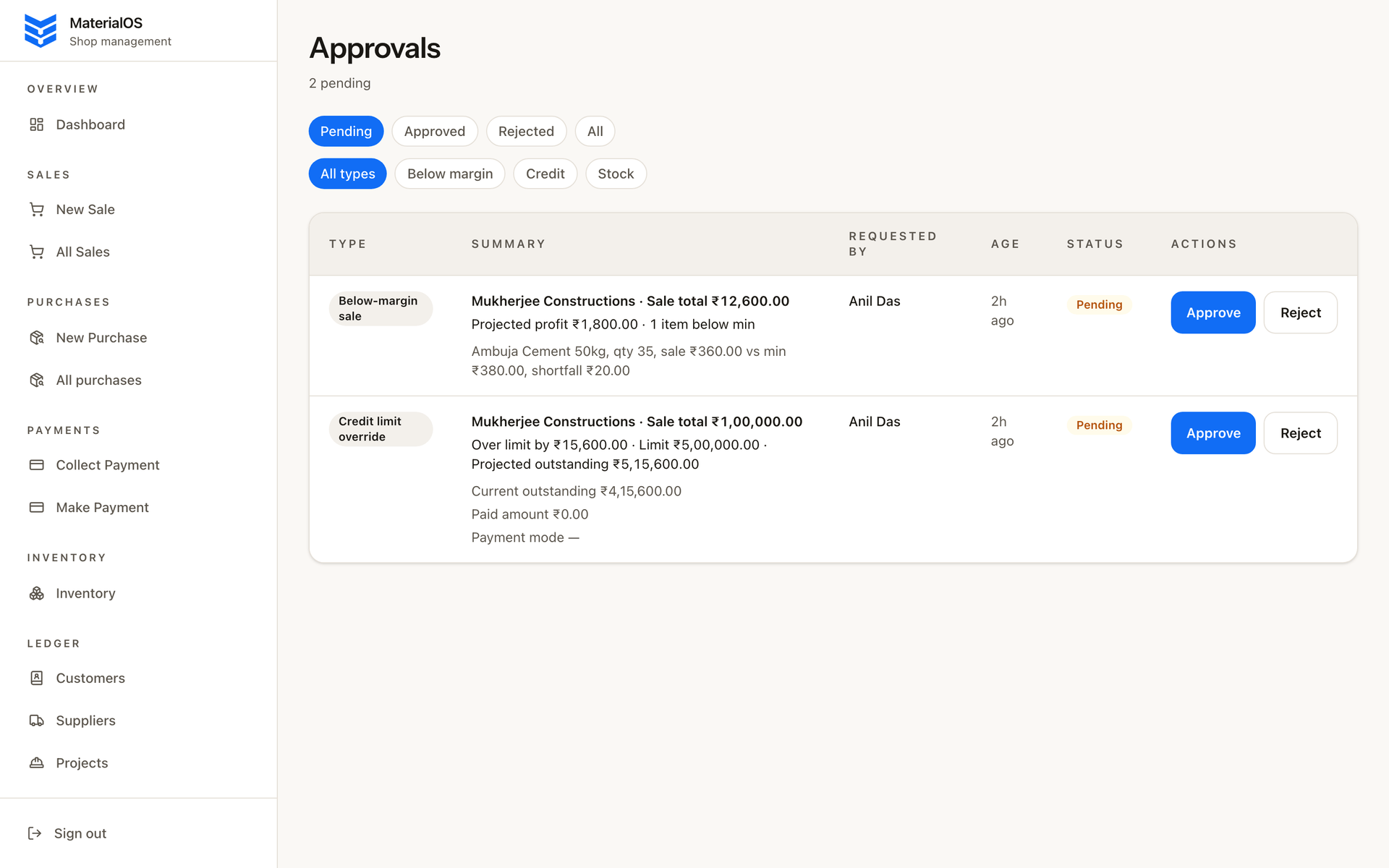
On every paid plan, credit-limit overrides and below-margin sales can queue for owner or manager approval. The counter stays honest; exceptions stay visible. Credit limits at billing ship on Starter too — you do not need a chain of shops before limits matter.
Leave paper without pretending freemium forever
MaterialOS has no permanent free plan. You get a 30-day Pro trial with no credit card, then Starter, Growth, or Pro at list prices that exclude GST (+ 18% GST at checkout). That is honest. If permanent free solo khata is the only job, freemium peers exist — and we say so on the comparison pages. If you need stock, billing, and credit on one ledger you will not outgrow, start here.